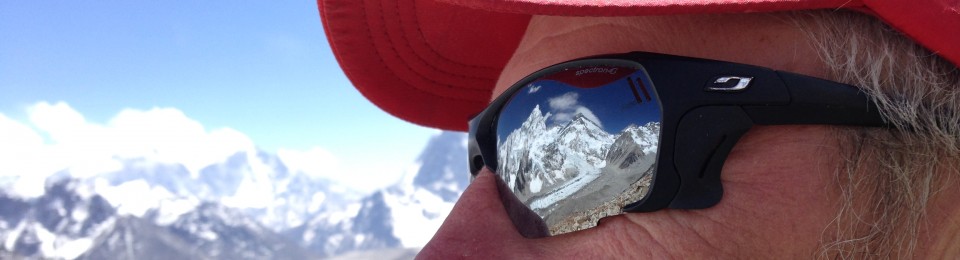
Today was all about ascent; over 2000m of it as we head up to the base of El Naranjo de Bulnes, possibly the most famous landmark in the Picos de Europa.
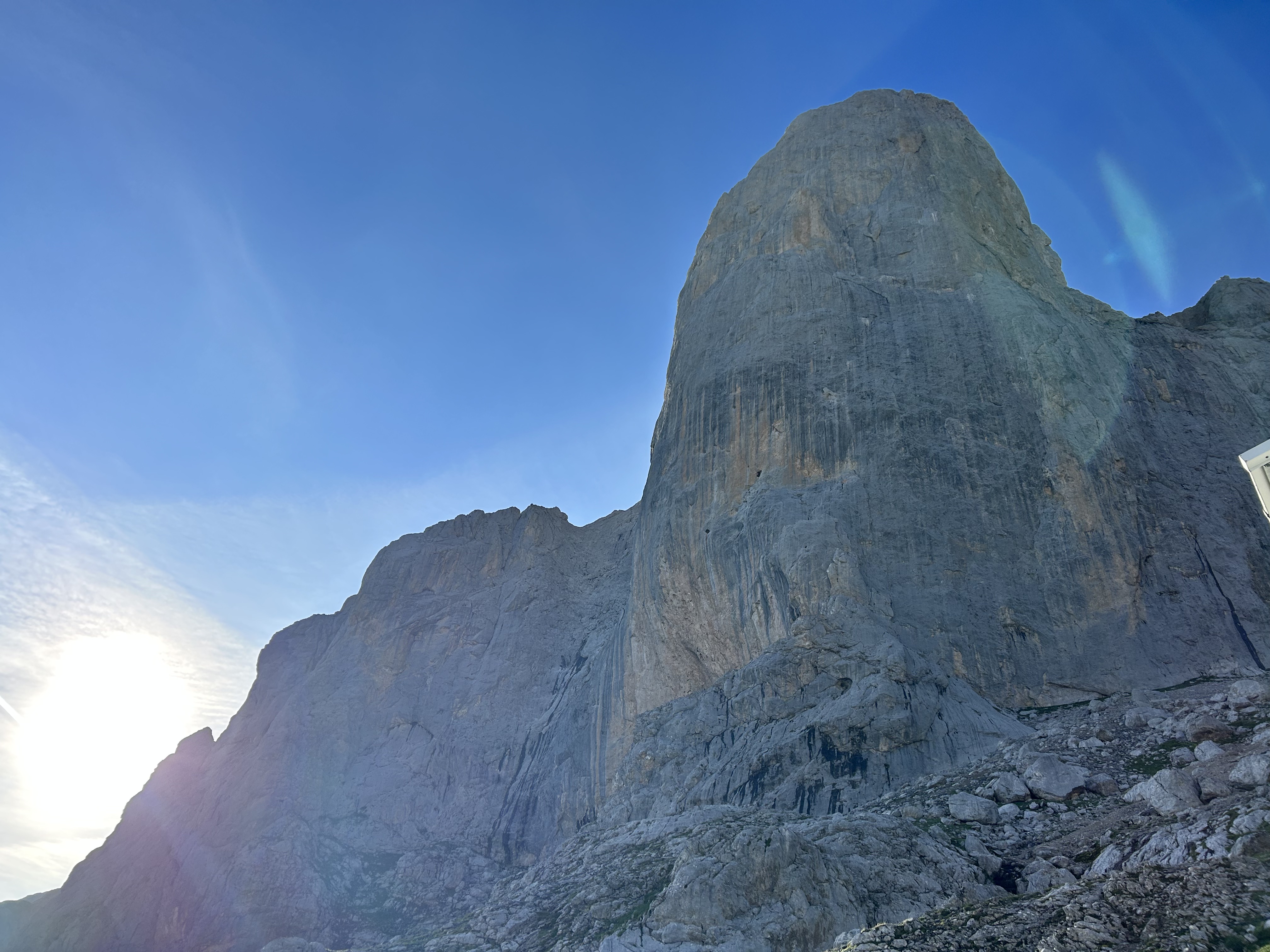
While I won’t go on about it, the name El Naranjo de Bulnes is quite interesting as it is known locally as Picu Urriellu and has been so historically. This is believed to be derived from the term Los Urrieles, which is used to describe the Macizo Central. The first written reference to “Picu Urriellu” as “Naranjo de Bulnes” is credited to a German geologist and engineer, Wilhelm Schulz, who, in 1855, published the first topographic and geological map of the area. It has been suggested that the name can be attributed to the orange hue of the limestone from which the peak is formed, but nobody really knows why Herr Schulz changed its name. The local residents of Bulnes have a saying: “No me llameis Naranjo, pues fruto no puedo dar, llamadme Picu Urriellu que es mi nombre natural”. (Don’t call me Orange tree, because fruit I cannot bear, call me Picu Urriellu which is my natural name).
It has an altitude of 2,529 metres and although it is by no means the highest peak of the Cantabrian mountain range, it can be considered the best-known summit in the world of Spanish mountaineering, especially the 550m high vertical wall of the west face. At its foot lies Vega Urriellu, a glacial valley, and the Los Urielles refuge to which were heading.
Just up the road from our hotel we contemplated the next few hours of steady climb through the Canal del Tejo. Here our guide Rosana delivered the good news. Apparently there was a short break after the first 600m of climb at the top of the funicular railway which takes tourists from the bottom of the gorge near our hotel, to Bulnes.
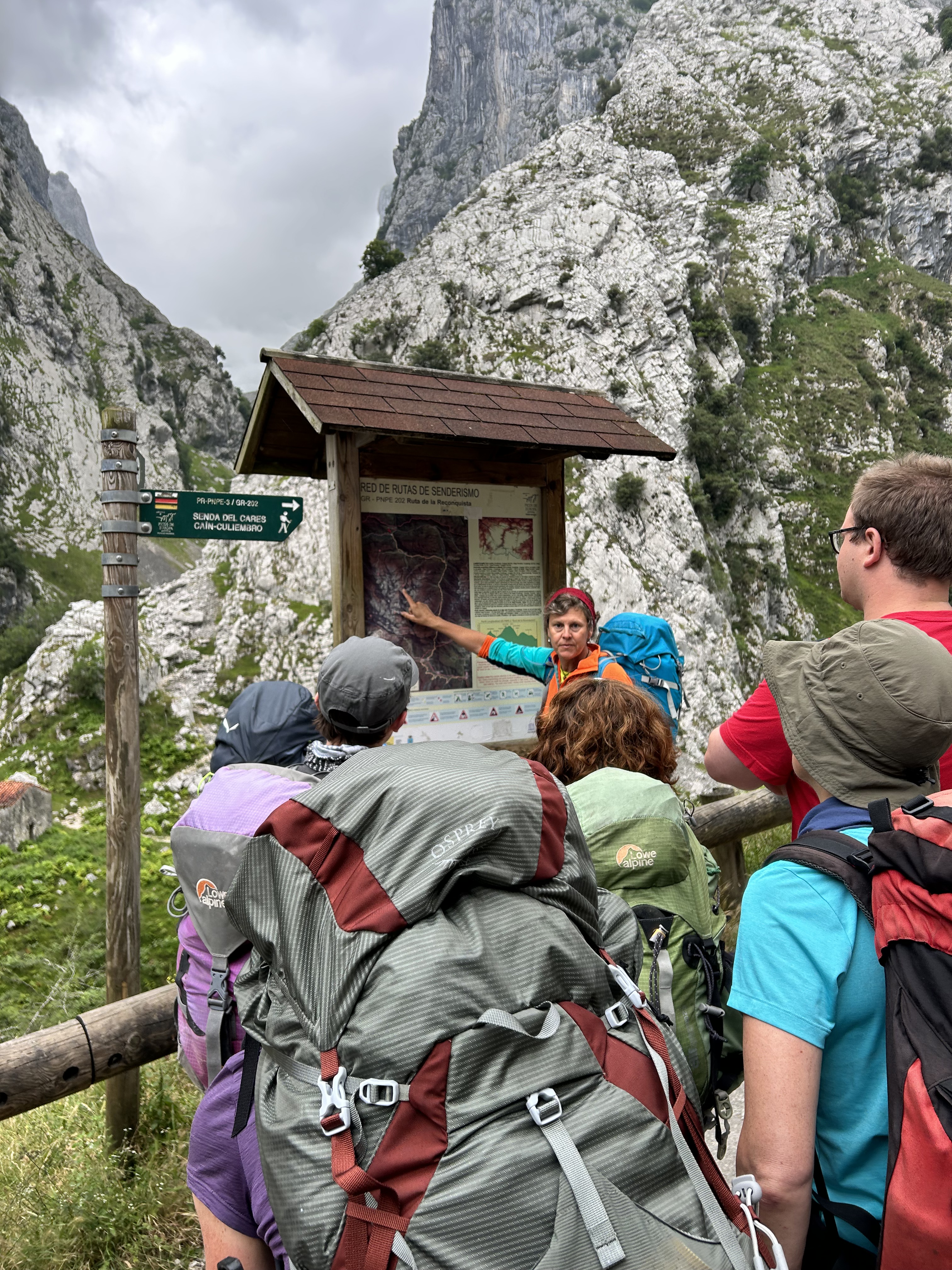
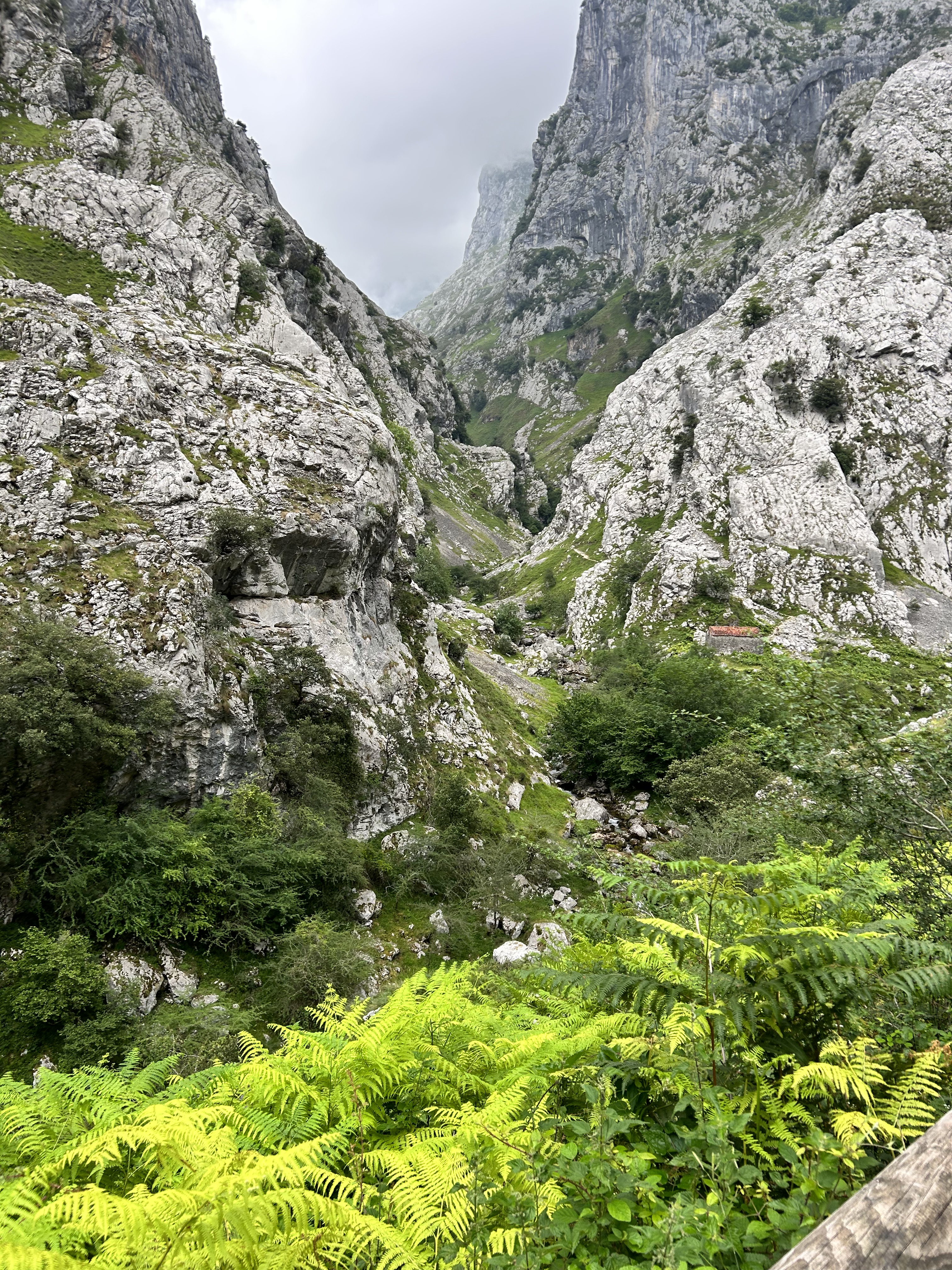
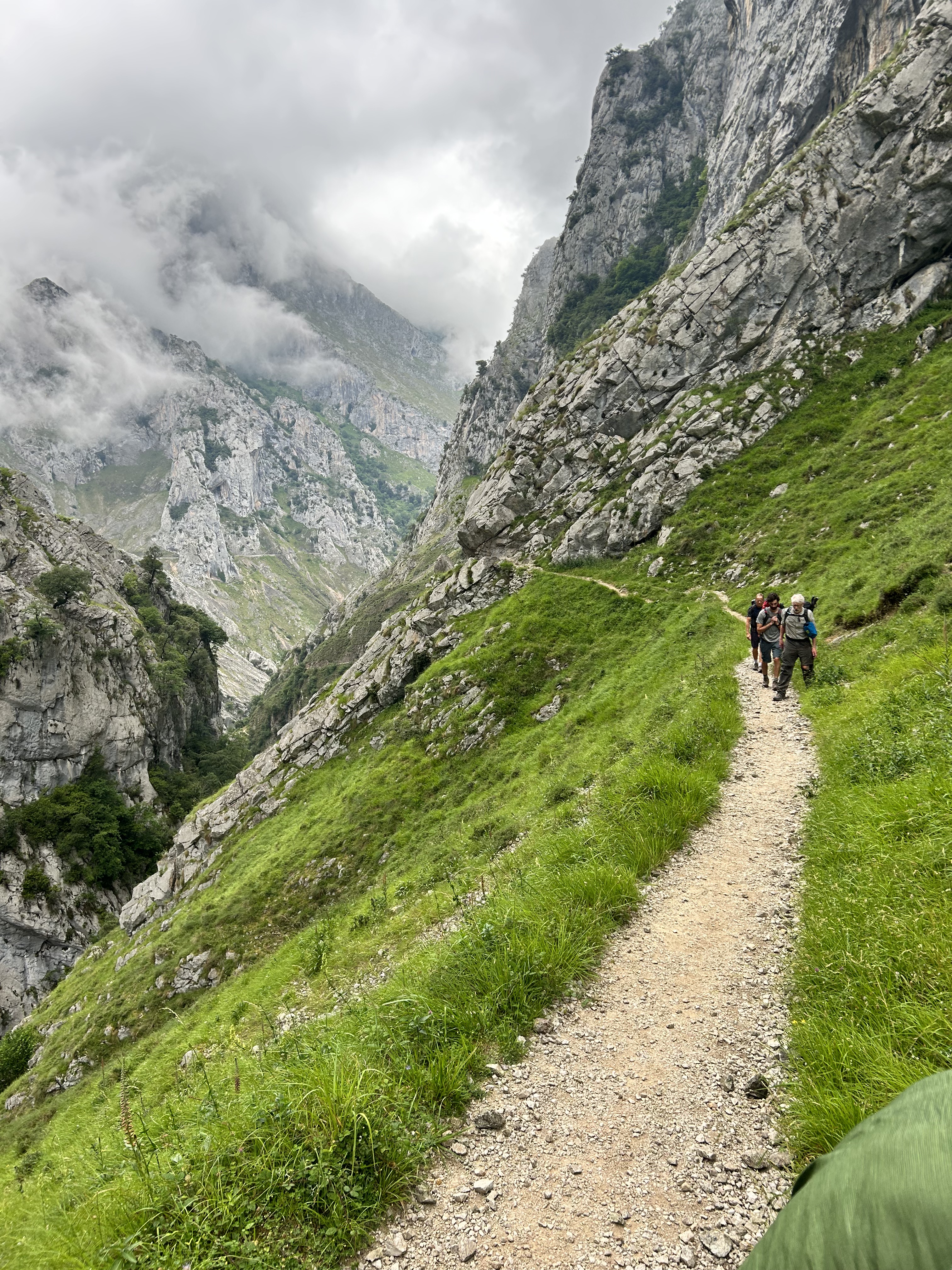
Climbing relentlessly we made progress on loose rocky paths through the chasm, thin woodland and grassy banks topped by towering rocks which loomed over us.
As promised, after about 600m of climb, wet through from the effort, we arrived at the top of the funicular.
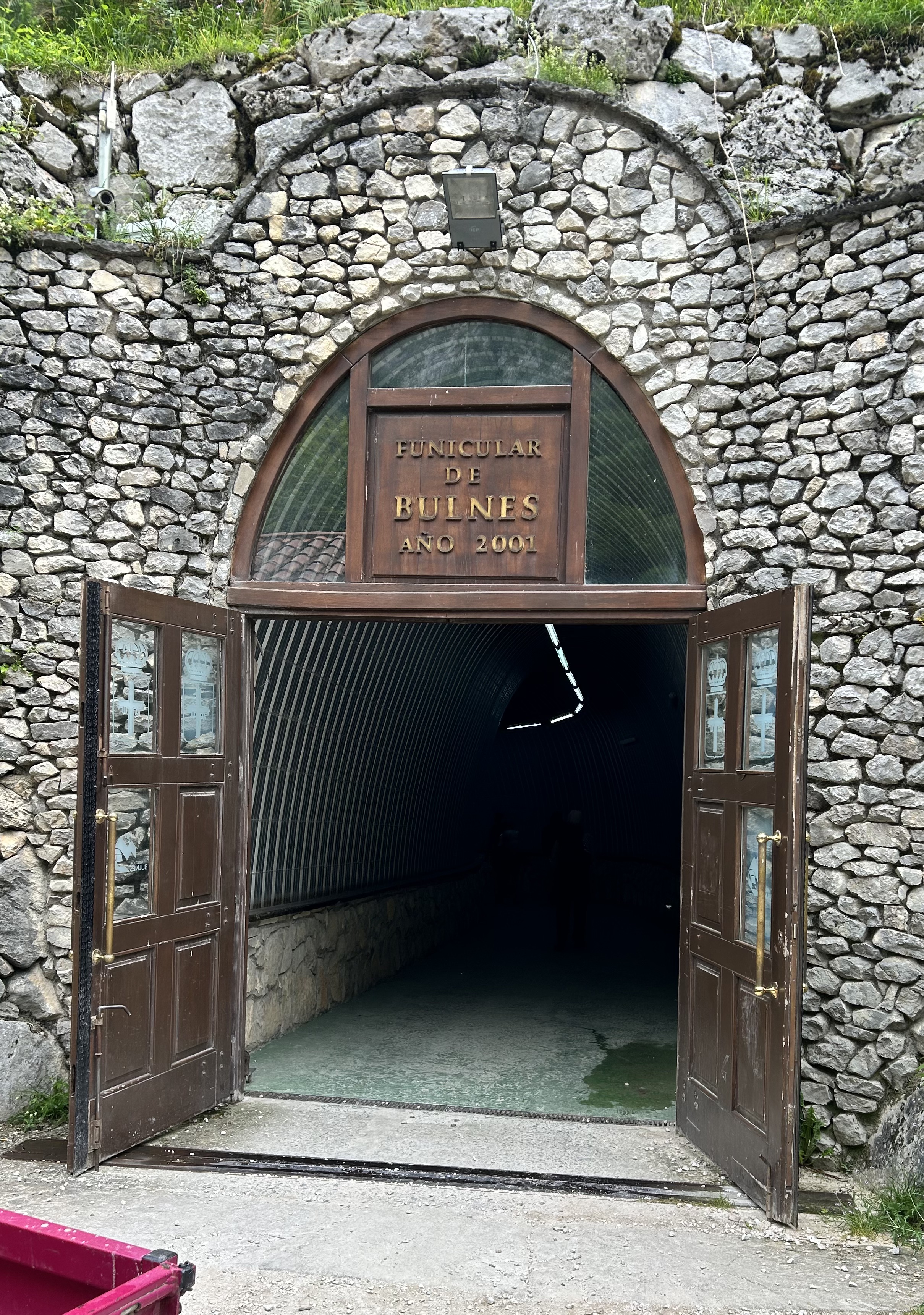
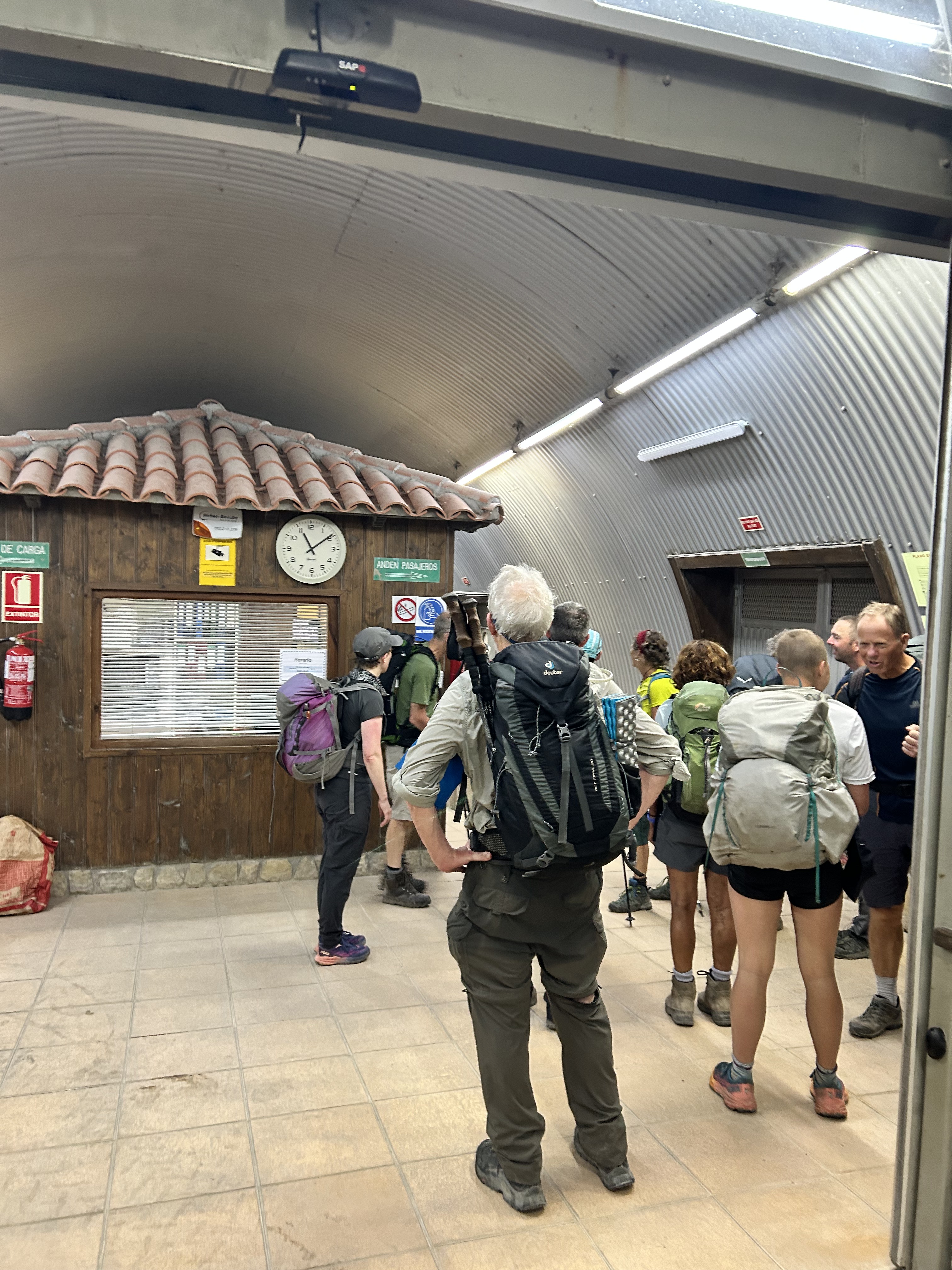
Nobody was going to take a ride back down of course, but it was an interesting opportunity to stop walking uphill and take on board a snack and some water.
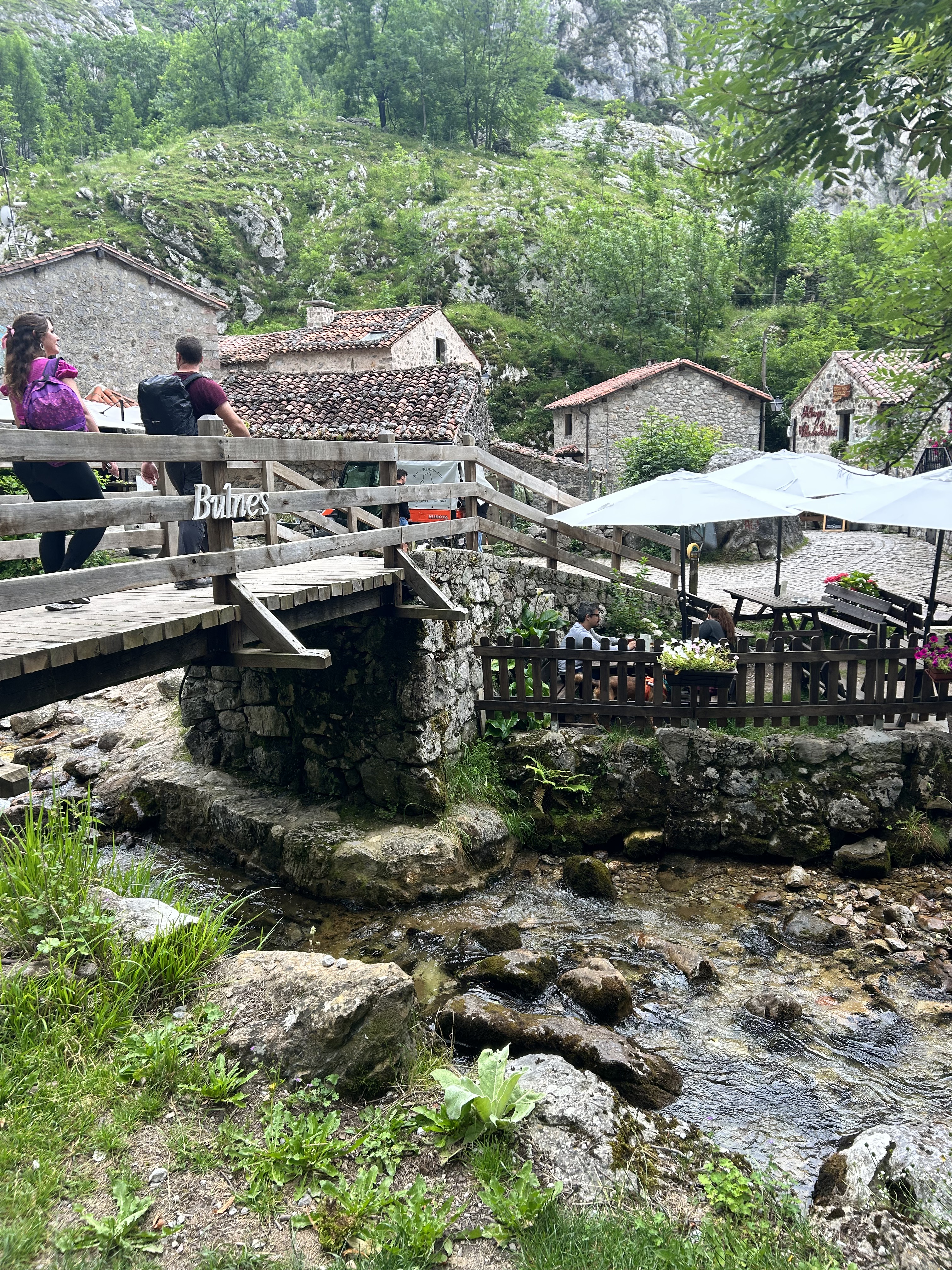
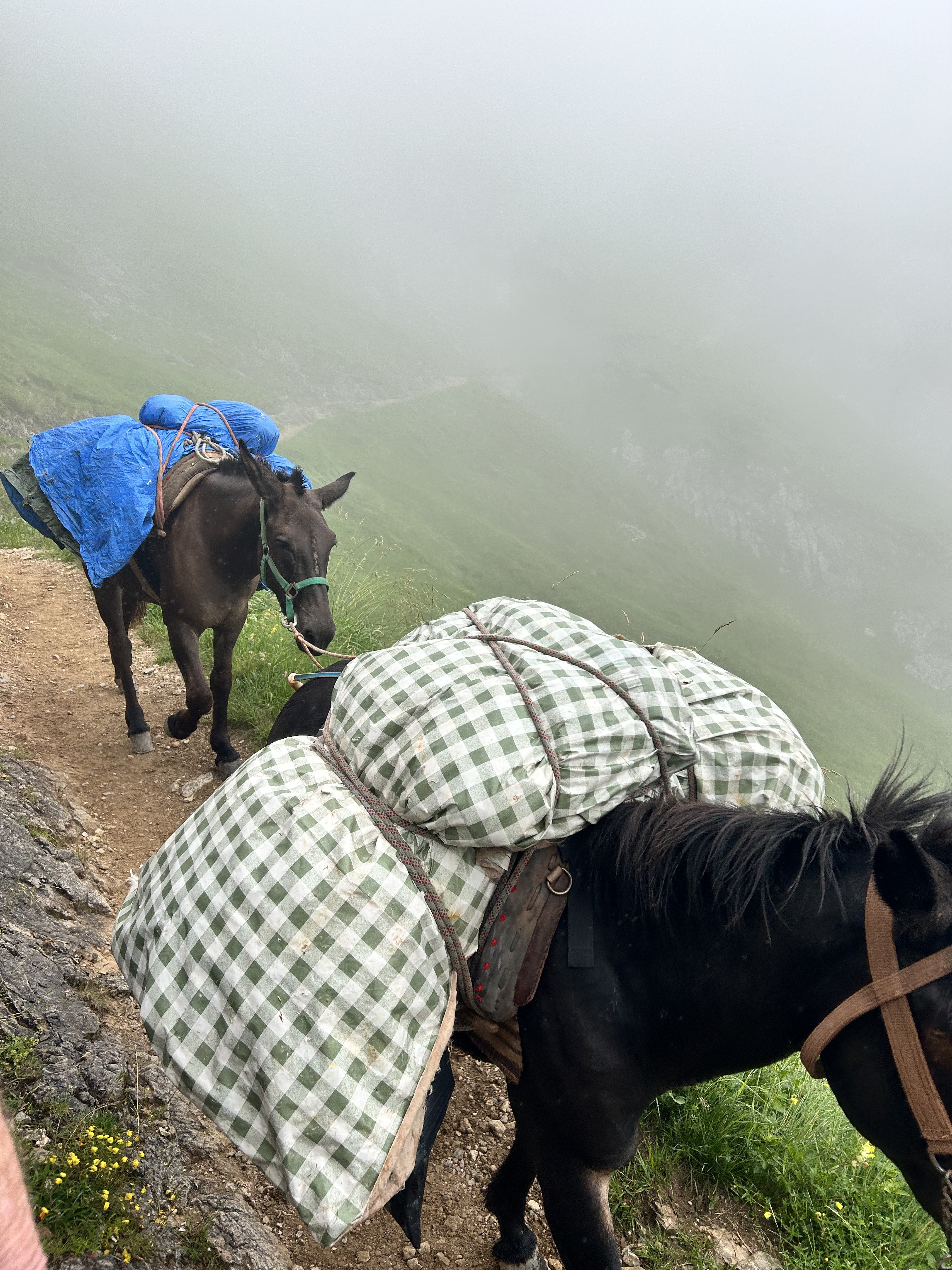
Just a few minutes later we arrived at Bulnes, a delightful small hamlet catering to the funicular users and those who preferred to walk there. There is no vehicular access – everything being delivered by the funicular railway, or on the backs of mules or other beasts of burden. Felling somewhat burdened ourselves we took a break over a coffee or lemonade (or similar) at the little cafe by the river. It was actually a little hotel too, El Caleyon.
All too soon it was time to leave this haven of relative flatness and start the next 600m of ascent. It was while waiting to leave Bulnes that I noticed my boots had seen better days. While the sole was still firmly attached to the increasingly shabby but sound upper, the rand (the bit of rubberised plastic around the front) on both boots had started to come away. In fact it had perished and needed very little assistance to come off completely. The rest of each boot was still solid but without the rand there was a breech in the waterproofing. Hmm – not good. They’d been fine before but I guess all things have a lifespan and my favourite Scarpa GTX’s had just reached the end of theirs. Needless to say I didn’t have spares unless I wanted to climb in my Merrell sandals (which I didn’t).
Anyway, moving on, we headed out of Bulnes, once more on paths through woodland at the bottom of the gorge. Soon after the woodland gave way to more openness as the Rio Tejo that we had been walking alongside for some of the morning broke into several tributaries each of which fed the main river from the upper slopes. It was still green all around, topped by grey sandstone, but the clouds were gathering and the spring in our steps, at least that which remained after a morning of non-stop ‘up’, reduced a little. However things looked up when after another 600m of climb we reached an even smaller hamlet than Bulnes. Used by shepherds in the past most of the stone buildings were in ruins or on their to being so. But on had been turned into a Refugio. At a hight of 1300m the Refugio de la Terenosa was well placed to offer beds and simple fare to travellers in these parts and we stopped for lunch and coffee or lemonade (or similar as mentioned previously). My roomy, Alasdair, had thoughtfully termed our preferred refreshment a ‘sports drink’. How thoughtful of their Spanish to have produced a ‘sports drink’ that looked and tasted quite a lot like a light beer. I think it was called San Miguel. Anyway, after 30 mins or so the clouds were still gathering and we had another 600m or so to go and after refilling our water bottles Rosana urged us onwards and upwards.
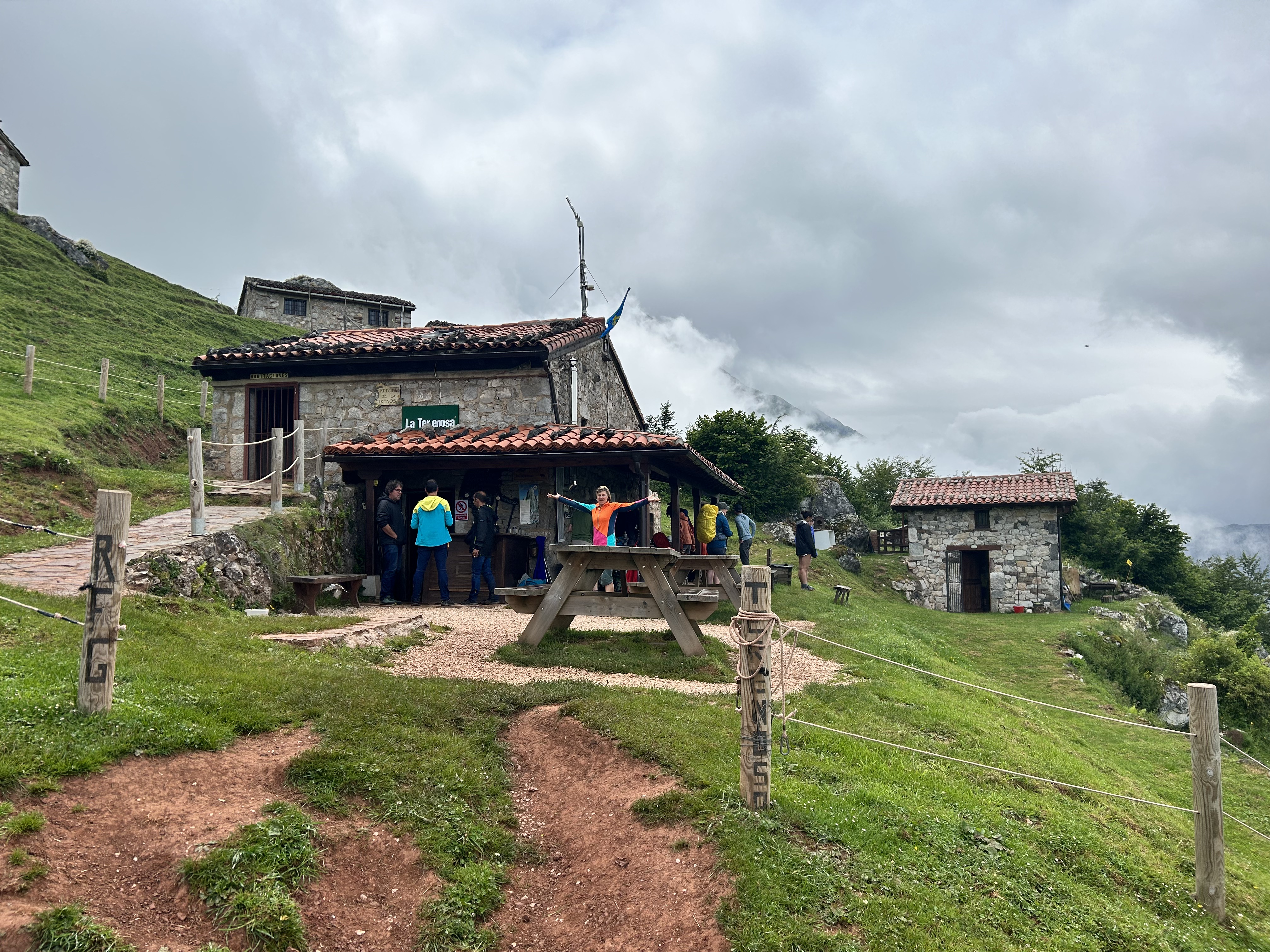
Above the Refugio de la Terenosa the way became distinctly more rugged. The trees, bushes and other signs of ‘low’ gave way to the signs of ‘high’. The tracks became rougher, the views more expansive (save for the gathering clouds which spoiled the views a bit), and we were jostled of the path by the occasional pack animal bustling stores from ‘low’ to ‘high’ and back again along the narrow paths that traverse the increasingly steep hillsides.
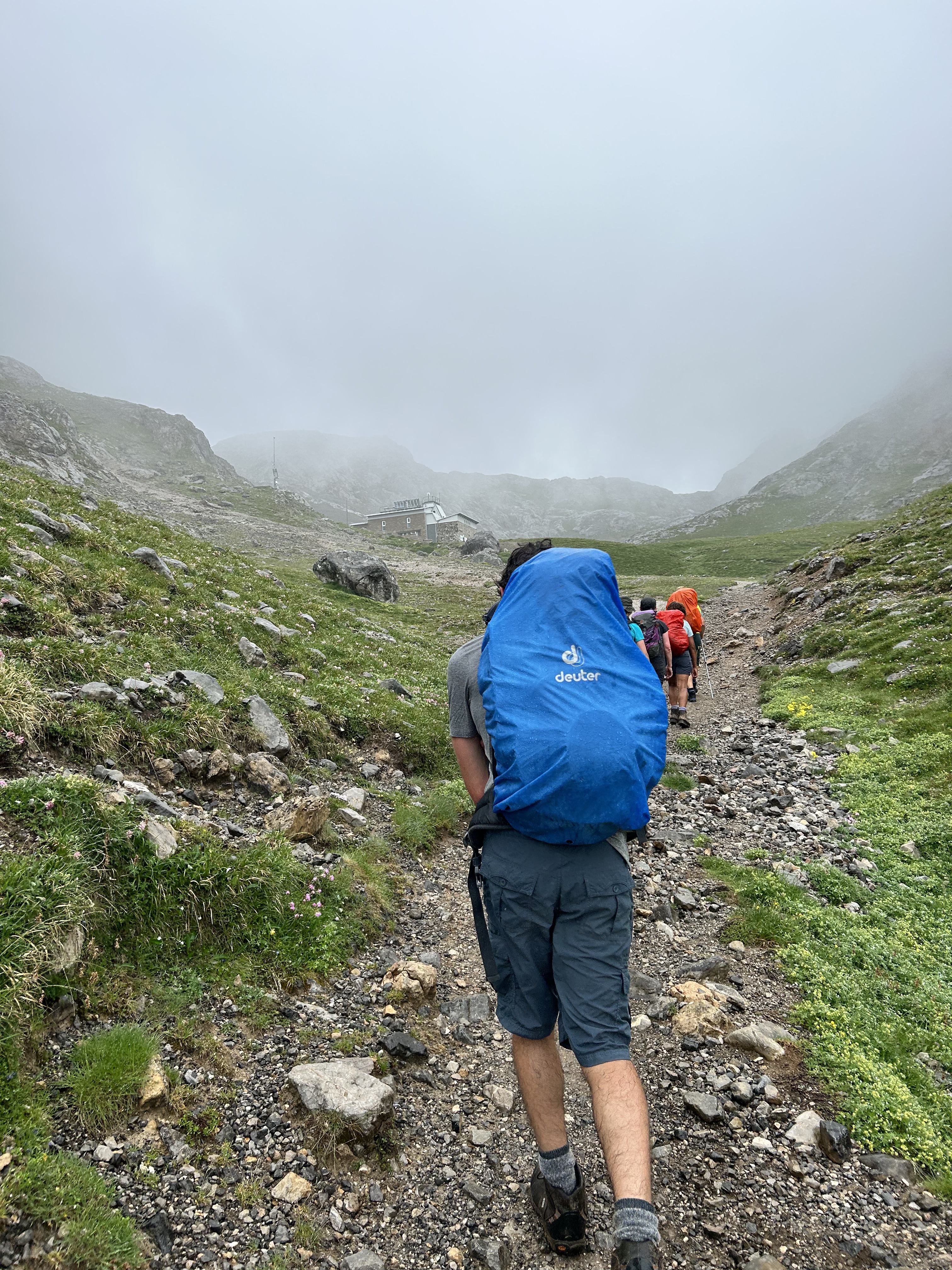
When we were about 30 minutes from our destination the weather finally changed. The mist and low cloud finally colluded and it started to rain. Packs were covered and some of our merry band donned waterproofs. I and a few others didn’t as we were already soaked from perspiration and it wasn’t cold. Not at that time at least. Through the rain we trudged on, trying not to notice that it was getting quite chilly and the rising wind wasn’t helping. As we approached the Refugio Vega de Urriellu the weather turned really quite nasty and we hurried on.
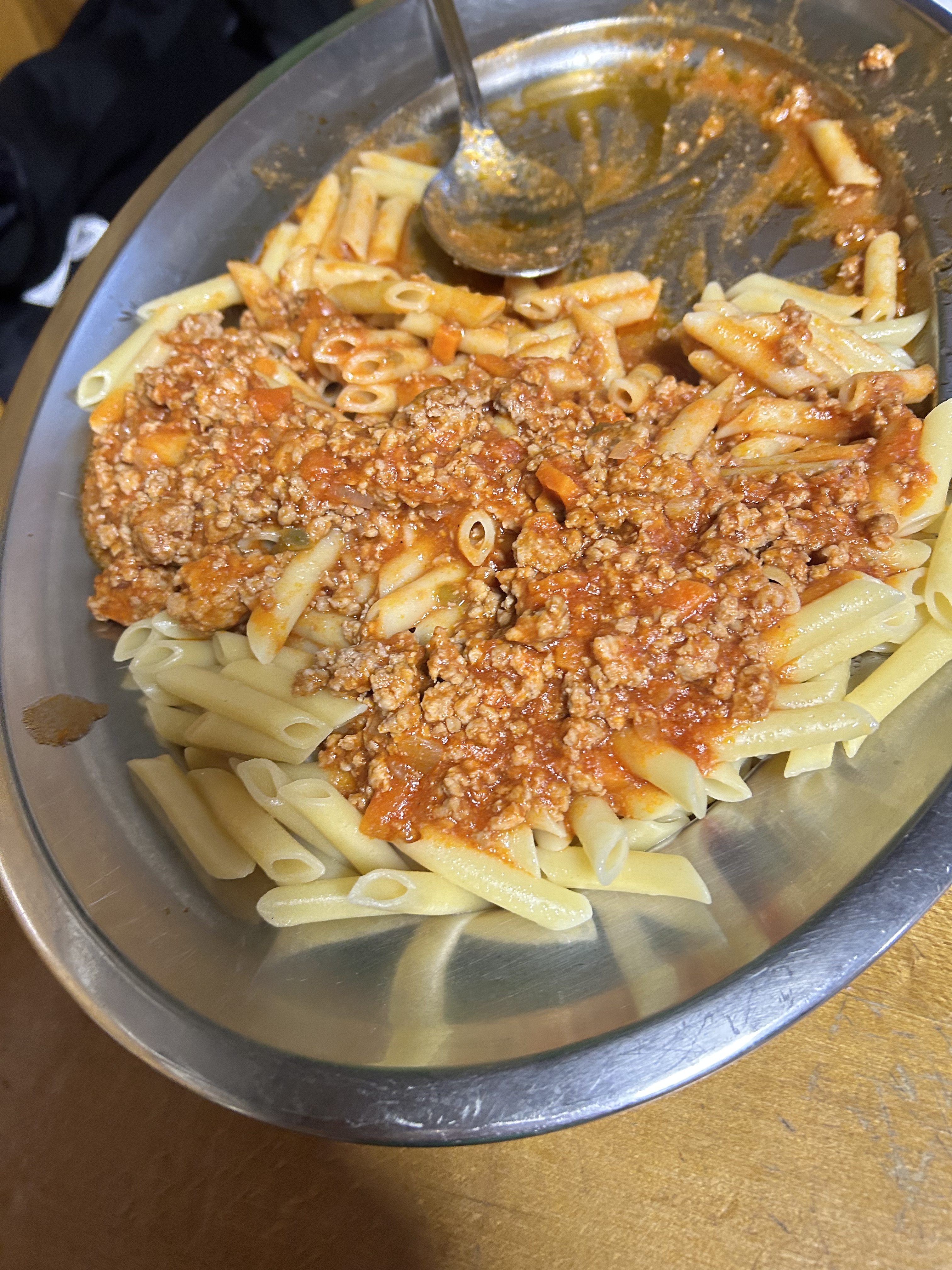
At about 5pm, 8 hours after we had left the Hotel Garganta del Cares back in the valley we reached the Refugio. No photo this time I’m afraid. It was pouring down and all 15 of us (14 walkers plus Rosana) were trying to get into the dry. Boots had to be exchanged for crocs in the small vestibule. There was about enough room for 8 people in this small area but when those people still had their packs on and were in various positions trying to remove boots the capacity reduced to about 4. So several people were just waiting patiently in the rain. Not a happy arrival. Nonetheless in due course everyone passed through, deposited their rucksacks in the appointed space and dried off. In lieu of a photo of misery I have have one of dinner. A completely delicious pasta con carne. I’m not sure what it was actually called but pasta con carne it most definitely was. Washed down with a ‘sports drink’ of course.
What a great day! See you tomorrow!
 Andy James