• About
  • Photographs
    • In Praise of Agiofili Beach
    • Corfu’s Most Beautiful Village?
    • Making a splash in Vassiliki

Andy James

~ A Writers Journey

Andy James

Monthly Archives: October 2016

The people of the Dolpo – the Dolpapa

07 Friday Oct 2016

Posted by andyjameswriter in Dolpo trek

≈ 3 Comments

Typically around 4000m high but surrounded by mountains over 6000m the Dolpo is inhabited by the toughest of people, the Dolpapa. The ending comes from the Tibetan, pa, meaning people.

The Dolpapa speak Nepali, Dolpo, which is a local dialect of Tibetan, and Kaike, a minority language spoken in just one Dolpo valley.They grow most of the crops they need and keep yaks, sheep and goats. Dolpo is not heavily populated. There are but 30 or so rough stone-built Dolpapa villages in an area of 1300 square kilometres.

Most Dolpapa are Buddhist although the Bon religion of Tibet, which pre-dates Buddhism, is still practised in some villages. The numerous fortified monasteries known as gompas, the frequent chortens (Buddhist shrines) and the animistic wooden dolls placed on buildings to ward off evil spirits serve as a reminder of the Dolpapas’ spirituality.

Lack of contact with the outside world has left the Dolpapas traditional culture and lifestyle largely untouched, but this also means modern development has bypassed the Dolpo and poverty is widespread, at least by Western standards. This adds another dimension to the areas rugged beauty. This is a hard place to live and Dolpapa have had to become self-sufficient and resilient.

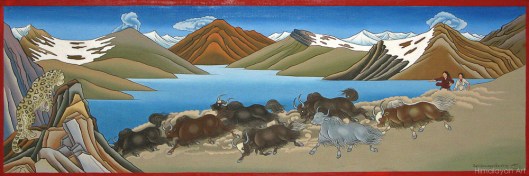
The major occupation is agriculture and most households grow potatoes, maize, wheat, millet, buckwheat, Tibetan barley, high altitude rice and native crops such as chino and kagumo. However lack of water and arable land is a problem and many can’t grow enough to feed themselves for the whole year. As a result animal husbandry is an important too with the number of animals owned indicating a family’s wealth and status. Sheep, goats, cattle and yaks are taken up to the high pastures for grazing during the summer months and brought back to the villages for the winter. Usually younger members of the family accompany the herds, living in stone huts. Yaks are well adapted to survival in this harsh environment. Indeed they can only live above 3000m. With their thick bushy tails and heavy wool and hair coats they can live outdoors in temperatures well below freezing. Their hair is woven into blankets and clothing, their skin provides leather and their milk forms an important part of the high altitude diet, both as liquid and as a hard dried cheese. In this barren region dried yak dung replaces wood as fuel for cooking and warmth and walls are often seen adorned with drying yak dung.

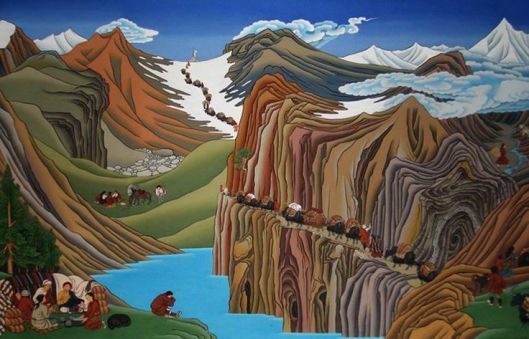
Trading is also important, particularly for those in the more remote areas. There are no roads in Dolpo so yaks are used as pack animals. Caravans of yaks go up to the high northern areas and across the border into Tibet or other Nepali mountain areas to collect medicinal plants, salt and other mineral resources, which are exchanged in lower areas for food, grains and other essentials. Finally, the weather is a tremendous challenge. In winter, when conditions in the high mountain areas are too harsh and cold for human survival, many people from the high villages leave their homes and live in yak hair tents in the lowland meadows, typically around the district headquarters of Dunai, where they survive by trading.

But the future may be looking a little better. Yarsagumba, which translates as ‘summer grass, winter insect’ is the mummified body of a Himalayan bat moth caterpillar that has been infected by a fungus. Found in Himalayan alpine areas at around 4000m Yarsagumba is prized for its supposed aphrodisiac properties when dried and eaten mixed with milk or honey. It fetches up to £650 per kilogram in China where it is also believed it to be a medicinal panacea, curing everything from headaches to cancer. Hardly surprising then that increasing numbers of Dolpapa head to the mountains in late spring in search of this fungal good fortune.

Perhaps more sustainable than yarsagumba, a tourism-training project has been underway in the district since 2008 with the aim of developing a number of new skills among the Dolpapa, including conversational English, cooking and hotel management.

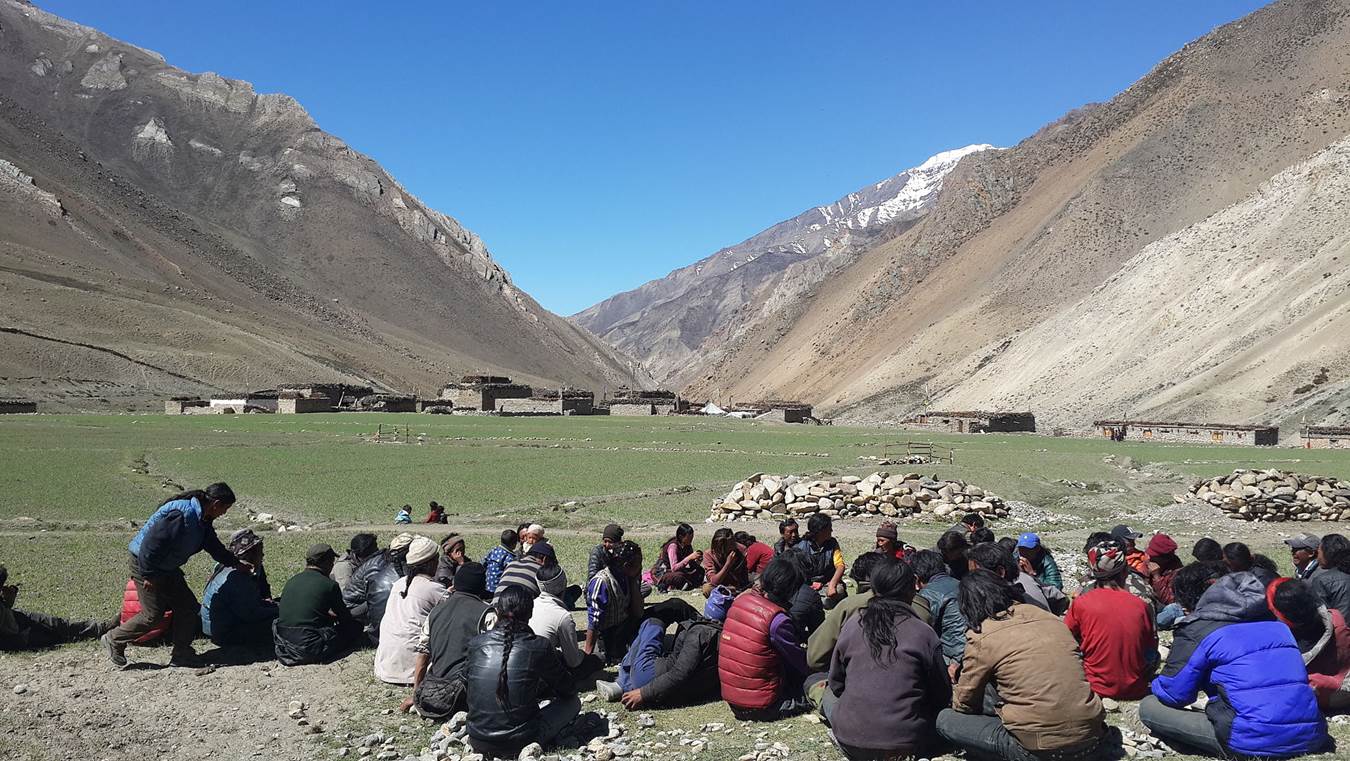
This photograph from Wikipedia shows Dolpapa at a meeting outside of their village.
Not all Dolpapa are struggling farmers. Tenzin Norbu Lama was born in 1971 into a line of painters dating back more than 400 years. He began painting and training from a very young age and while he also trained in sculpture and mask making, painting and drawing were his favourites.painting and drawing were his favourites.
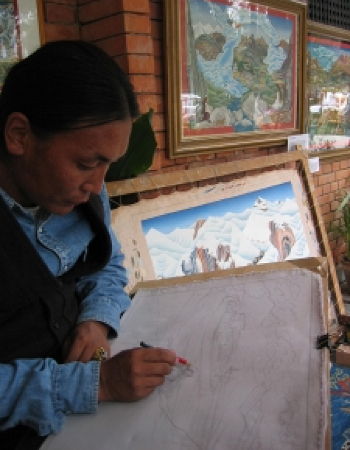
tennor.jpg

Known for its harsh climate his village lies at 4,500m and its dramatic mountain landscapes feature often in his art. Norbu says that for inspiration he draws on his family, historical books, legends, and his own memories of Dolpo, which he often sees in his dreams.

Norbu’s work has appeared in many international publications, including National Geographic magazine as well as the feature film, “Himalaya”, which was nominated for an Academy Award in 1999. Norbu exhibits his painting regularly in Nepal and abroad.

Here are some examples of his work.
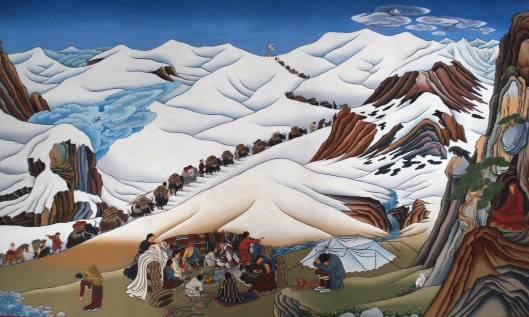
TenzinNorbu_Caravan.jpg

3b99421a059af490381c37d0aa64fb18.jpg

Tenzing.Norbu.Himalayan.art.contemporain.contemporary.1-2.jpg

Why the Dolpo?

03 Monday Oct 2016

Posted by andyjameswriter in Dolpo trek

≈ 2 Comments

Over the past few months a common question in the minds of those I have told about this adventure is ‘so why the Dolpo?’. Following the brief introduction in my last post I offer a little more today. My sources are ‘The Great Himalayan Trail’, a book by Robin Boustead who developed the idea for the most challenging alpine trek in the world, and Wikipedia.

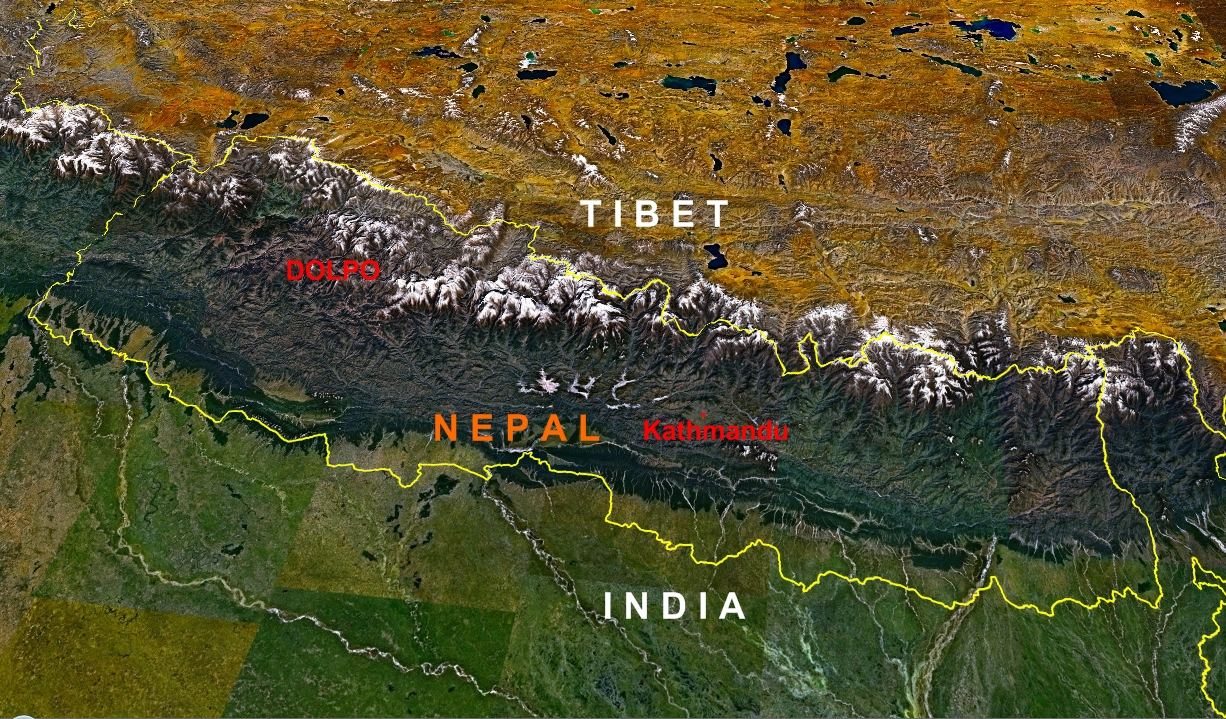
In his book, Robin says Dolpo is remote and wild, considered by many to be one of the most magical and mysterious of places in the Himalaya. Linked for hundreds of years to Tibet, this region lies among the high peaks, on top of the roof of the world. Oasis-like villages dot barren landscapes, scarred by deep canyons, and all beneath velvet blue skies. He goes on to say that a combination of ancient animist beliefs, Tibetan Buddhism, and Bon religions predominate throughout the cultivated Lower Dolpo valleys, and up to the high, arid plateau around Saldang. Now that Mustang is losing some off its authenticity following a new road having been built, the Dolpo is perhaps the the last genuine example of traditional Tibetan culture. This picture shows the location of Dolpo to the northwest of Nepal.

To add spice, should that be needed, Robin adds there are a number of trekking options that run through Dolpo and all are magnificent. Most trekkers enter and exit Dolpo via the dirt airstrip at Juphal in Lower Dolpo. Alternatively experienced groups could consider the much more committing access routes from Mustang (east) or Mugu (west) where trail finding and acclimatisation pose additional challenges.

You probably won’t be surprised to learn that we intend intend to trek around 240 miles from Jomsom in Mustang to Jumla in the west. Most of the time we shall be over 4000m with frequent climbs to over 5000m and camping every night. I have seen treks offered from Jomsom to Juphal (or the other way) and from Jumla to Juphal (or the other way) but not all the way from Jomsom to Jumla. We shall be using Juphal as our emergency exit should that be necessary.

I hope this answers the question ‘why Dolpo?’. It is quite simply a breathtaking challenge – in more ways than one!

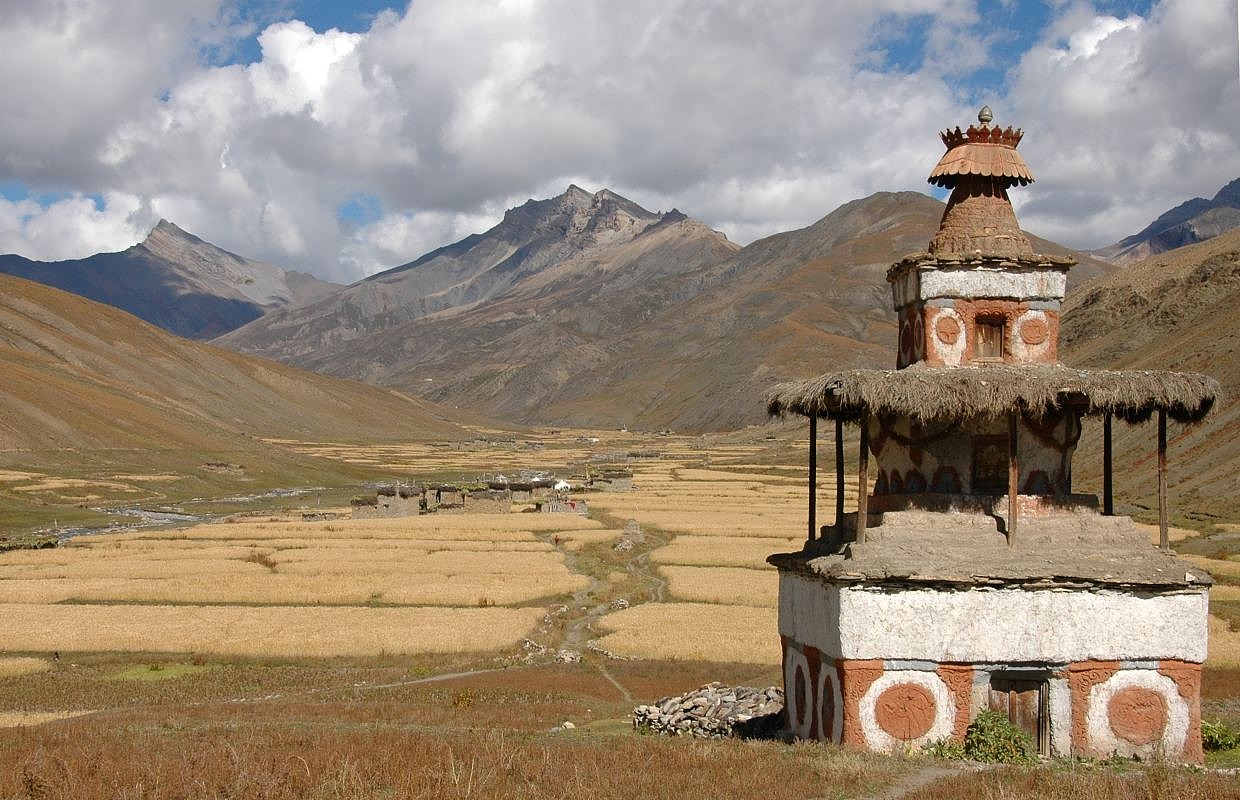
I will share the detailed main trekking route and the emergency exit route in due course but will close now with a few photos from wikipedia that hopefully bring the text to life. I expect to bring a few photos back that I can share without breaking copyright. Should you want to see more photos in advance then an internet search for ‘Dolpo photos’ might be rewarding!

These are Lower Dolpo from wikipedia. Upper Dolpo is more mountainous.

Introducing the Dolpo adventure

01 Saturday Oct 2016

Posted by andyjameswriter in Dolpo trek

≈ 8 Comments

One month from today, at about this time on Tuesday 1st November, I will be landing in Kathmandu at the start of an incredible adventure the seeds of which were sown 3 years ago. In early October 2013 I and others were at the bar in Kathmandu’s Everest Hotel having just returned from Cho Oyu. The expedition leader, now my good friend, Tim Calder was telling us about his dream trek. While he had travelled extensively throughout Nepal he was drawn to the Dolpo region. Dolpo is described by the trekking company KE Adventure Travel as “one of the least accessible and yet most alluring corners of Nepal. Few travellers have penetrated to the heart of Dolpo. This is very much the land that time forgot.” Kamzang Journeys says that Dolpo is “one of the highest inhabited realms on the planet; a breathtakingly beautiful and mountainous region of fortified villages, ‘dzongs’, turquoise lakes, sacred mountains and high passes.”

Tim’s dream was to complete an extensive trek of over 200 miles through this region along the Great Himalayan Trail, climbing many 5000+ metre passes and using ponies to assist with the load carrying. In the aftermath of the Cho Oyu expedition I was captivated by this dream but at that time never imagined it would become a reality. But through determination and with the support of many people, it now has.

Tim and I planned to make an attempt last year but in the wake of Nepalese earthquakes and with the relief effort still being in full swing we felt that a super-challenging trek could place an unreasonable burden on people still striving to recover. This year we see no such issues. The flights are booked and we will be in Nepal for the whole of November.

Over the next month I will share with you, periodically through my blog, information about the region and its people, our route, kit, communications and power, weather, insurance, planning and preparation and other bits and pieces that might be of interest. We will travel with a small team of fellow trekkers and sherpa support. Once on the trek I hope to be able to send updates by short email or text from a satellite phone either directly to the blog or via Clare who has offered once again to be “Radar” (the radio operator from M*A*S*H).

While KE, Kamzang and other trekking companies do offer trekking in Dolpo, Tim and I don’t think anyone has walked as extensively over such tough terrain within our timeframe as we plan to. We don’t even know if it can be done.

Excited? Oh yes!

Watch this space…

Newer posts →

Enter your email address to subscribe to this blog and receive notifications of new posts by email.

Join 49 other subscribers
Follow Andy James on WordPress.com

Blog Archive Categories

  • Dolpo trek (45)
  • Lefkas (3)
  • Mont Blanc June 2019 (9)
  • Picos de Europa (8)
  • The Great Glen Way (5)
  • The Haute Route (10)
  • The West Highland Way (6)
  • The Writing Journal (6)
  • Walking London – the Capital Ring (4)

Blog at WordPress.com.

  • Subscribe Subscribed
    • Andy James
    • Join 49 other subscribers
    • Already have a WordPress.com account? Log in now.
    • Andy James
    • Subscribe Subscribed
    • Sign up
    • Log in
    • Report this content
    • View site in Reader
    • Manage subscriptions
    • Collapse this bar
 

Loading Comments...